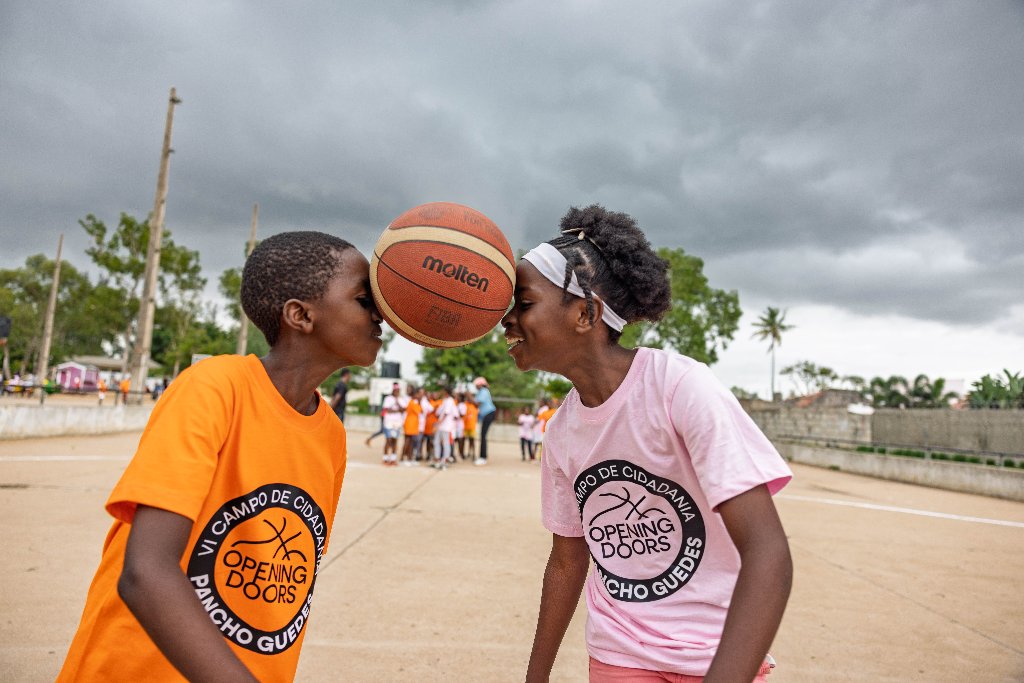
Beyond the classroom, an education centred on positive values.
siku ni siku
day by day
The need
A good harvest starts with good sowing.
Girls and boys begin a season of rapid growth, and new needs arrive with it. It is a season of experiences that can shape, for better or for worse, everything that follows.
School and family carry most of a child's formation, but they were not built to carry it alone. In Mozambique, as elsewhere, children grow up between pressures and possibilities that ask for a wider kind of learning, one that meets them where curiosity actually lives.
Joy of Life and Opening Doors are our educational proposals, or, in Sir Ken Robinson’s words, a way “to enable students to understand the world around them and the talents within them, so that they can become fulfilled individuals and active, compassionate citizens.”
Both programmes share a holistic approach and a free curriculum, working alongside families and educational institutions, beyond the conventional classroom walls, through rich, flexible experiences that touch every aspect of life: social, emotional, sporting, academic, cultural and environmental.
Our approach
One method. Two programmes.
They share one method, sport, the arts, environment and citizenship, and differ in who they reach and where.
01Ages 7–17 · Urban and rural Mozambique
Opening Doors
Opening doors through sport, the arts, environmental education and active citizenship.
The problem
School and family alone do not prepare children, girls above all, for the choices and pressures they face.
The approach
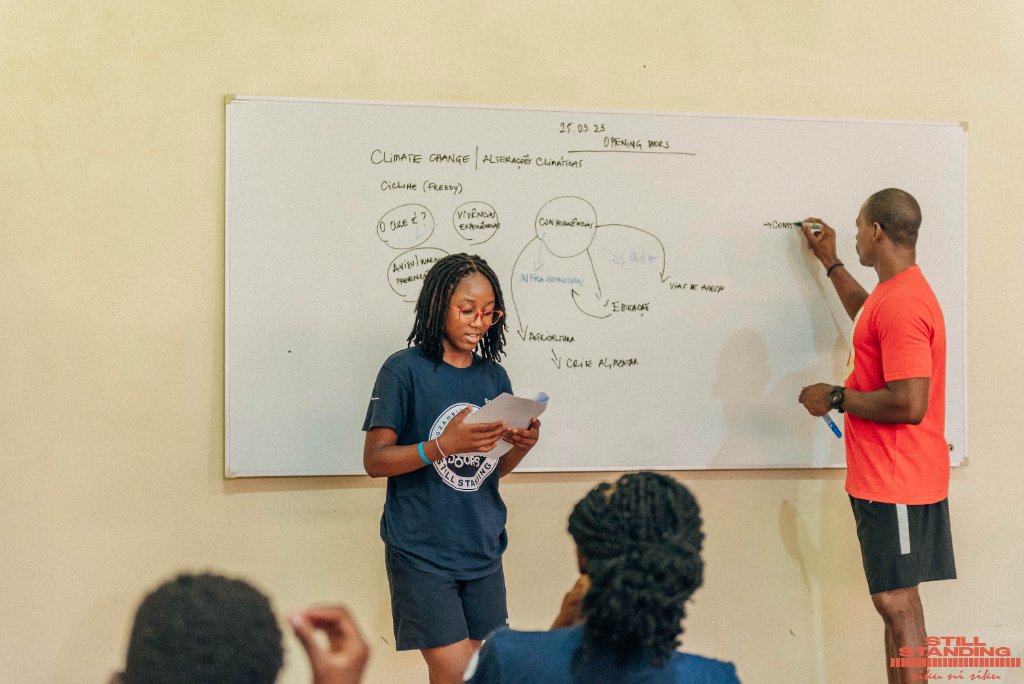
A 13-month cycle of basketball, arts, citizenship and life-skills workshops, with mentors, across Maputo and Mozambique's biodiversity areas.
The change
Children who stay in school, know their rights, and grow up with references and confidence.

02Ages 7–12 · Communities of the Niassa Special Reserve
Joy of Life Niassa
Stewardship of biodiversity and the rights of native communities, health and culture inside Mozambique's largest wildlife reserve.
The problem
In one of Mozambique's most remote regions, the future of the communities and of wildlife depends on the same generation.
The approach
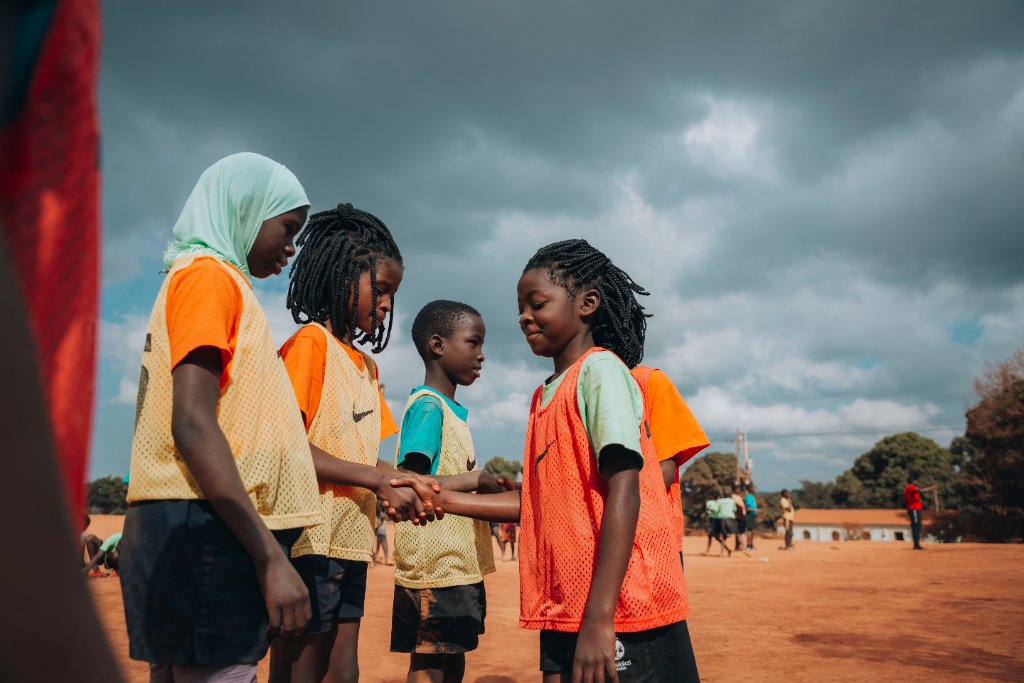
An annual, several-week module run with the Niassa Carnivore Project, health, environment, sport, art and tradition, together.
The change
Raise a generation of children for whom personal growth and the reserve's future are connected.
Objectives
What we work for.
Building bridges.
- 01
Promote good values and mentoring through an interdisciplinary, holistic approach.
- 02
Provide a safe place for children to express their feelings and socialise.
- 03
Promote social and environmental justice, and gender equity.